Is Alaska Silver Salmon Fishing the Ultimate Late-Summer Adventure?
When we think about the peak of the Alaskan summer, we usually picture the heavy-hitting King salmon or the massive sockeye runs that dominate the June and July headlines. However, there is a distinct, rhythmic shift that happens in late July. The air gets a bit crisper, the tundra starts to hint at gold, and a different kind of chrome-bright fighter enters the river systems. We are talking about the Coho. Alaska Silver Salmon fishing isn’t just a backup plan for those who missed the early runs; it is a specialized, high-energy discipline that many veteran anglers prefer over anything else. On the Nushagak River, this season represents a perfect storm of high fish density and aggressive feeding behavior that is simply unmatched in the Pacific Northwest.
The Coho Calendar: Timing Your Nushagak Trip
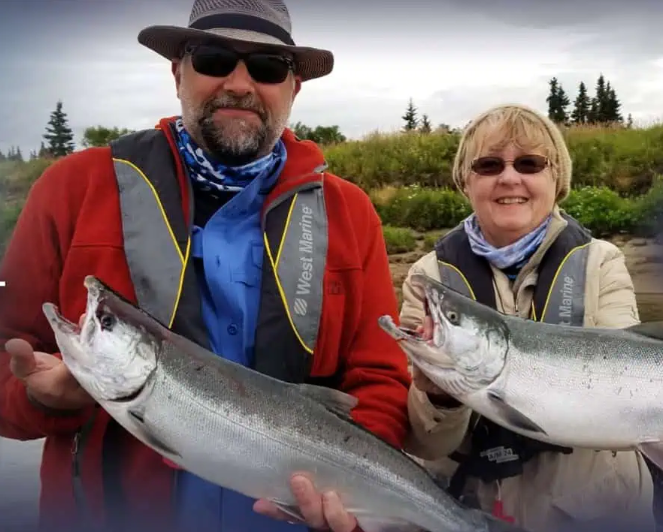
Timing is everything in the bush. While the Kings own the river from June 15 to July 5, the Silvers typically make their grand entrance around July 21 and push through Aug. 15. According to historical data from the Alaska Department of Fish and Game (ADF&G), these runs are remarkably consistent. In 2025, while some systems faced fluctuations, the Nushagak remained a primary producer for sport anglers. We target these fish when they are “ocean-fresh,” meaning they still carry the sea lice and the explosive energy of the salt.
Technical Tackle: Gear for the Silver Surge
To succeed in Alaska Silver Salmon fishing, you need to understand that these fish are the “acrobats” of the family. They don’t just pull; they jump, twist, and run toward the boat.
- Rod Selection: We recommend an 8-weight or 9-weight fly rod with a fast action to handle the wind and heavy streamers.
- The Reel: A large-arbor reel with a sealed disc drag is a must. You don’t want your drag freezing up when a 15-pounder decides to go on a 50-yard tear.
- Fly Patterns: Pink is the color of choice. Whether it’s a weighted Dolly Llama or a pink Hareball Leech, if it’s bright and has movement, they will kill it.
- Spinning Gear: For those using gear, a medium-action spinning rod with 12-lb to 15-lb monofilament is the gold standard for throwing Blue Fox Vibrax spinners (size 4 or 5).
Surface Strikes and Sloughs: A New Narrative
Most people think salmon fishing is a deep-water game. We want to offer you a fresh perspective: top-water Silvers. Unlike Kings, which hug the bottom of deep channels, Silvers love the slack water. We find them in “frog water”—the quiet sloughs and eddies off the main current. This is where the magic happens. Using a “pink wog” or a foam surface popper, you can actually watch a Coho wake across the surface to intercept your fly. It is heart-stopping, visual, and completely different from the traditional “swing and hope” method.
The Bristol Bay Connection: Fly vs. Gear
In the world of Bristol Bay fly fishing, the Silver salmon is king. Because they congregate in shallower, slower water, they are much more accessible to the fly than Sockeye or Kings. We’ve found that a “strip-strip-pause” retrieve mimics the erratic movement of a wounded baitfish, triggering a predatory response rather than just a territorial strike.
Integrating Bristol Bay fly fishing techniques into your trip adds a layer of finesse to the raw power of the Alaskan wilderness. In 2025, ADF&G reports showed that sport fishing effort in the Nushagak District remains high because the river’s structure allows for these varied approaches. Whether we are back-trolling plugs in the main stem or hiking into a secret slough with a 9-foot fly rod, our goal is to put you in the middle of the action.
Join Us at Fish The Nush
At the end of the day, we aren’t just guides; we are stewards of this incredible river. We have rebuilt our lodge from the ground up to ensure that after you spend ten hours battling Silvers, you have a warm, insulated cabin and a 5-star meal waiting for you. Our 150 years of combined experience means we know where the fish hide when the barometer drops. We want you to experience the Nushagak not just as a tourist, but as an angler who understands the heartbeat of the run.
Frequently Asked Questions
- What is the daily bag limit for Silvers?
On the Nushagak, the limit is typically 5 per day. This allows for a great harvest to take home while maintaining a sustainable population. - Can beginners catch Silvers on a fly?
Absolutely! Silvers are very “forgiving” fish. Their aggression makes them the perfect species for someone looking to learn fly fishing in a high-success environment. - Do I need to bring my own waders?
While we provide top-tier gear, many guests prefer their own boots for fit. However, our lodge is fully equipped with high-quality Simms waders if you want to save space in your luggage. - How big do the Silvers get?
The average Nushagak Silver is about 8 to 12 pounds, but every season we see bruisers pushing the 18 to 20-pound mark. - What happens to the fish I catch?
We professionally fillet, vacuum seal, and flash-freeze your catch on-site. We then pack it in airline-approved 50-lb boxes for your journey home.
